 how-to
Best Practices for Rental Property Maintenance
Table of Contents
- Why a Proactive Maintenance Plan Protects Your Investment
- Your Rental Property Maintenance Checklist for Every System
- Building a Rental Property Maintenance Schedule That Works
- The Rental Maintenance Request Process: Triage and Response
- Using a Rental Property Inspection Checklist
- Lifecycle Planning: When to Repair vs. Replace
- Vendor Selection, Documentation, and Digital Workflows
- Conclusion
- Frequently Asked Questions
Last Updated: October 20, 2026
Why a Proactive Maintenance Plan Protects Your Investment
Rental property maintenance is the ongoing work of keeping a rental home safe, functional, and rent-ready through scheduled inspections, routine repairs, and fast responses to tenant requests.
Here's what most owners get wrong: they wait for something to break, then pay premium prices for emergency repairs. A proactive plan flips that.
The payoff shows up in three places:
- Longer equipment life. A well-serviced HVAC system and water heater outlast neglected ones.
- Fewer turnovers. Clean, working units keep good tenants in place.
- Lower operating costs. Planned repairs cost less than emergency ones.
The U.S. Department of Housing and Urban Development sets habitability expectations that every landlord should understand before building a maintenance plan.
Your Rental Property Maintenance Checklist for Every System
A rental property maintenance checklist organizes every recurring task by system, so nothing gets missed. We group tasks into interior systems and exterior upkeep. Below is the checklist we would use on any single-family rental.
Interior Systems and Safety Items
Start inside, where tenants live and where safety risks hide.
- Test smoke detectors and carbon monoxide alarms monthly; replace batteries yearly
- Replace HVAC air filters every 1-3 months
- Check for water leaks under sinks and around the water heater
Exterior, Roof, and Drainage
Outside, water is the enemy. Most expensive damage starts with a clogged gutter or a small roof leak.
- Clean gutters twice a year and check downspouts
- Inspect the roof after storms and each season
- Seal gaps around doors and windows to keep pests out
Building a Rental Property Maintenance Schedule That Works
A rental property maintenance schedule is a calendar of recurring tasks split into monthly, seasonal, and annual work. The trick is to spread tasks out so no single month is overloaded.
We build schedules around the seasons, because weather drives most maintenance needs. Here's a simple framework.
Seasonal Maintenance Tasks by Month
| Season | Key Tasks | Frequency |
|---|---|---|
| Spring | Roof inspection, gutter cleaning, HVAC tune-up, exterior paint check | Once |
| Summer | AC filters, pest control, deck and fence checks | Monthly filters |
| Fall | Heating check, gutter clearing, weather sealing, smoke alarm batteries | Once |
| Winter | Pipe freeze protection, leak checks, drainage clearing | As needed |
A common mistake is skipping the off-season. Winter is when frozen pipes and ice dams cause the worst damage, and it's the season owners forget.
The Rental Maintenance Request Process: Triage and Response
The rental maintenance request process is how a tenant reports a problem and how quickly it gets fixed. A clear process protects both the tenant and the owner, and it is the area where most landlords lose time, money, and goodwill. The unique angle here is triage: not every request deserves the same response, and treating them all as equal is how small issues become emergencies.
A Practical Severity Matrix
We sort every request into four tiers with defined response targets. These are internal service standards, not legal requirements, always confirm your own obligations under state and local law, since repair-and-response timelines for habitability items vary by jurisdiction.
| Tier | Examples | First Response | Repair Target |
|---|---|---|---|
| Emergency | Active water leak or flooding, no heat in freezing weather, gas odor, sewage backup, no working locks, exposed wiring, sparking outlets | Within 1 hour, 24/7 | Same day; mitigate immediately |
| Urgent | No hot water, broken refrigerator, non-functioning toilet (only one in unit), slow drain threatening backup | Same business day | Within 24-72 hours |
| Routine | Dripping faucet, cosmetic damage, minor appliance issue, caulking, paint | Within 1 business day | Scheduled within 7-14 days |
| Deferred / Project | Full system replacement, exterior repainting, roof replacement | Acknowledged within 2 business days | Planned into capital budget |
Emergency Response and Escalation Steps
An emergency workflow should be written down before a tenant ever needs it. A common pattern among experienced managers:
- Intake. Tenant calls the 24/7 emergency line (not email) and the request is logged with time, name, unit, and description.
- Triage. The on-call coordinator classifies severity using the matrix above and, for true emergencies, gives the tenant immediate safety instructions (shut off the water main, leave the unit if there is a gas odor, call the utility or 911 as appropriate).
- Dispatch. The on-call vendor is contacted with a work order and an expected arrival window.
- Mitigation. The vendor stops the damage first, shut-off, containment, temporary repair, before permanent repair.
- Escalation. If the vendor cannot be reached within the response target, the coordinator escalates to the backup vendor and notifies the owner.
- Follow-up. The request is closed only after the tenant confirms the issue is resolved and photos are attached to the record.
What Counts as an Emergency
Emergencies are the situations where delay causes injury, property damage, or loss of habitability. Typical examples include:
- Active leaks and flooding, water damage compounds by the hour; a supply-line failure can destroy flooring, drywall, and cabinets overnight.
- Heating failure in freezing conditions, frozen and burst pipes follow quickly, and many states treat heat as a habitability requirement.
- Electrical hazards, burning smells, sparking outlets, or a panel that will not reset warrant immediate attention and, if there is fire risk, a call to the fire department.
Documentation and Communication
Every request becomes a written work order with a date, description, severity tier, assigned vendor, and resolution notes. That record matters. The Consumer Financial Protection Bureau reminds landlords and tenants that clear documentation protects both sides in a dispute. Send the tenant a confirmation when the request is received and again when it is scheduled, and keep all messages in one thread so nothing is disputed later.
Using a Rental Property Inspection Checklist
A rental property inspection checklist is a standardized form used to walk a unit and record its condition.
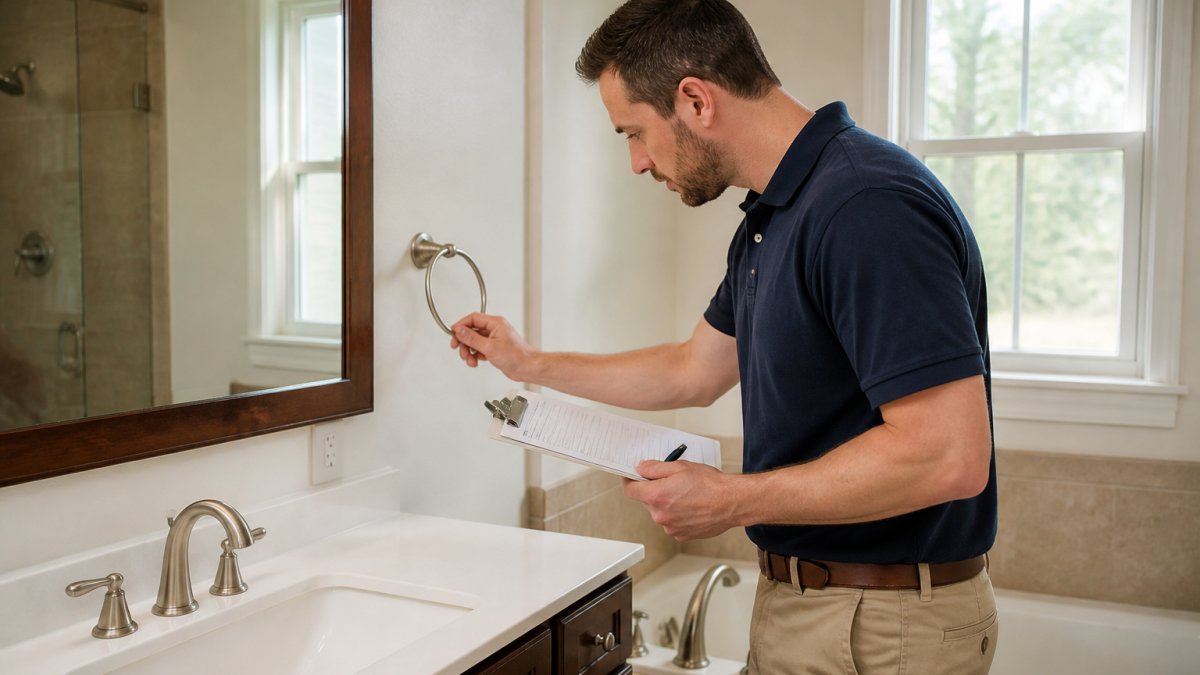
Inspection types we rely on:
Schedule Your Free Consultation →
- Move-in inspection: documents condition before a tenant takes possession
- Periodic inspection: catches deferred maintenance and lease violations
- Move-out inspection: supports deposit decisions with photo evidence
Document every inspection with dated photos. This is how you prevent costly disputes at turnover.
Lifecycle Planning: When to Repair vs. Replace
Lifecycle planning is deciding when a system or appliance should be repaired versus replaced. Owners who plan ahead avoid surprise replacements that wreck the maintenance budget. The unique angle here is treating each major asset as a depreciating item with an expected service life, a replacement cost, and an annual cost of ownership, not as a surprise expense.
Expected Service Lives
These are commonly cited planning ranges for residential systems and appliances. Actual life depends on climate, water quality, usage, and maintenance history, so treat them as benchmarks, not guarantees.
| Asset | Typical Service Life | Notes |
|---|---|---|
| Roof (asphalt shingle) | 20-30 years | Shorter in hail or high-sun regions |
| HVAC system | 15-20 years | Furnace and condenser often differ |
| Water heater (tank) | 8-12 years | Tankless units often longer |
| Refrigerator | 10-15 years | Compressor failure is the usual end |
| Dishwasher | 9-12 years | Leaks are the common failure |
| Washer and dryer | 10-13 years | Hoses and belts are the weak points |
| Flooring (carpet) | 7-10 years | Higher for hard surfaces |
| Exterior paint | 7-10 years | Shorter in harsh sun |
The Repair-vs-Replace Decision
A simple rule of thumb helps, but the better method is to compare the repair cost against the remaining life and the annual cost of ownership.
- Repair when the fix costs less than half the replacement cost and the unit has several years of life left.
- Replace when repairs become frequent, the system is near the end of its expected life, or the repair cost approaches half the replacement cost.
- Replace proactively when a unit is past its expected life and a failure would be disruptive, for example, a water heater in an occupied unit during winter.
A useful framing: divide the replacement cost by the expected service life to get an annual cost of ownership. If a repair costs more than one year of that annual cost and the unit is already past two-thirds of its life, replacement is usually the better financial decision.
Tracking Assets
Keep a simple asset register for each property: item, install date, expected life, replacement cost estimate, repair history, and warranty expiration. Review it annually and flag anything entering its final third of expected life. That flag becomes a line item in the capital budget rather than an emergency call.
Budgeting for Replacements
Set aside a reserve for capital replacements based on the asset register. A common approach is to fund the reserve monthly so that a roof or HVAC replacement is covered when it arrives. This keeps operating costs predictable and prevents emergency spending at premium prices.
Vendor Selection, Documentation, and Digital Workflows
Vendor selection is choosing reliable contractors who respond fast and do quality work at fair prices. The right vendors make maintenance feel effortless. The wrong ones create callbacks and complaints.
We screen vendors on three things:
- Response time for emergencies
- Licensing and insurance in place
- Clear pricing before work starts
Then we document everything. Every work order, invoice, and photo goes into a digital record. At Performance Property Management, our detailed financial reporting tools give owners that visibility, so nothing gets lost.
Conclusion
Maintaining a rental property takes steady attention, and one missed task can turn into a major repair. That's where a professional partner helps. Performance Property Management handles timely maintenance and inspections, gives you a technology-forward owner portal with detailed financial reporting, and manages tenant relations so you don't field every call. Schedule your free consultation and let us protect your investment.
Frequently Asked Questions
What qualifies as routine maintenance on a rental property?
Routine maintenance covers the recurring tasks that keep a rental safe and functional: replacing HVAC air filters every 1 to 3 months, testing smoke detectors, clearing gutters, checking for water leaks under sinks, re-caulking bathroom fixtures, and servicing appliances. These are planned, budgeted items on a rental property maintenance schedule. Emergency repairs, like a burst pipe or failed water heater, fall outside routine maintenance and require immediate triage. Separating the two helps landlords plan operating costs and respond faster when something urgent happens.
How often should a landlord inspect a rental property?
Most landlords conduct a move-in inspection, a move-out inspection, and at least one routine inspection per year, with many scheduling a second walkthrough mid-lease. A rental property inspection checklist should cover interior systems, exterior condition, and safety devices like smoke detectors. More frequent inspections are reasonable for older homes or properties with recurring issues, but state law and the lease set the notice requirements. Document every inspection with photos and notes so you have maintenance records if a damage dispute arises.
How should landlords prioritize rental maintenance requests?
Triage requests into three tiers. Emergencies, such as no heat, active water leaks, sewage backups, or electrical hazards, get same-day response. Urgent items, like a broken refrigerator or non-working toilet, should be handled within 24 to 72 hours. Routine requests, such as a dripping faucet or cosmetic wear, go on the next scheduled maintenance visit. A written rental maintenance request process with defined response times sets expectations for tenants and prevents small repairs from turning into costly property damage.
What maintenance tasks should be completed seasonally?
Spring and summer focus on exterior upkeep: roof inspection, gutter cleaning, HVAC servicing, and exterior painting touch-ups. Fall prep includes heating system checks, weatherstripping, and draining outdoor lines before freezing temperatures. Winter is the time for interior checks, pest detection, and reviewing the maintenance budget for the year ahead. A seasonal rental property maintenance schedule spreads tasks across the calendar so no single month carries an overwhelming workload, and it helps you prevent costly repairs instead of reacting to them.
A note on legal requirements: Habitability standards and landlord obligations vary by state and locality. Always confirm current rules with your local housing authority or a qualified attorney before relying on any maintenance policy.