 ultimate-guide
The Complete Guide to Managing Rental Properties Remotely
Quick Summary
Managing rental properties from out of state depends on reliable systems rather than physical presence. Owners succeed by setting up a standing written maintenance channel, a fixed inspection schedule, and a documented process for screening, rent collection, and emergency repairs.
- Remote ownership depends on channels that surface problems early, not on doing tasks yourself.
- Inspect the property every six months and keep dated photos filed with the lease.
- Give tenants an online maintenance form so every request arrives in writing with a date.
- Pre-authorize emergency repair categories and a dollar cap, and keep two backup vendors per trade.
- Verify any property manager's licensing, insurance, vendor network, and reporting before signing.
Table of Contents
- Why Managing Rental Properties From Out of State Is Harder Than It Looks
- Self-Managing a Rental Property Checklist for Remote Owners
- Remote Rental Property Management Software and Tools
- Out-of-State Rental Property Inspection Checklist and Schedule
- Handling Tenant Screening, Rent Collection and Emergency Repairs Remotely
- Hiring a Property Manager for an Out-of-State Rental: Costs, Contracts and Due Diligence
- Booking Your Free Consultation to Set Up Remote Oversight
- Frequently Asked Questions
Why Managing Rental Properties From Out of State Is Harder Than It Looks
Managing rental properties from out of state means every routine task, from a leaky faucet to a late rent payment, depends on people and systems you cannot see.
The core problem is information. A local owner notices a stained ceiling during a drive-by.
Distance also changes how you judge a manager. A local owner can drop by the property. A remote owner has to verify work through photos, invoices, reports and inspections.
Self-Managing a Rental Property Checklist for Remote Owners
Self-managing from a distance is workable if you commit to a fixed routine. The checklist below covers the tasks that most often slip when no one is on site.
- Confirm your lease, rental application and disclosure forms comply with your state's landlord-tenant rules
- Identify a local handyman, plumber and electrician before you need one
- Set up online rent collection so payments and records stay in one place
A common mistake is relying on a tenant's phone call as your only early-warning system. Build a standing request channel, such as an online maintenance form, so issues arrive in writing and with dates attached.
Remote Rental Property Management Software and Tools
Property-management software is the backbone of remote ownership, but the goal is not to collect apps, it is to build one repeatable workflow where every application, lease, payment, maintenance ticket, inspection photo, and receipt lands in a single searchable record. Read whether an owner portal is worth using to oversee the property from afar before choosing your stack.
A practical remote stack usually has five layers. Pick one tool per layer, confirm the tools export data in standard formats (CSV, PDF), and test the export before you sign a lease.
- Listing and application layer: syndicate vacancies to the major rental listing sites and accept online applications with uploaded pay stubs, ID, and prior-landlord references. Use a tenant-screening provider that returns a written report you can retain, the federal Fair Credit Reporting Act (FCRA) requires that you obtain applicant authorization before pulling a consumer report and that you follow adverse-action notice rules if you decline based on it.
- Lease and e-signature layer: store the executed lease, addenda, lead-based paint disclosure (required for pre-1978 housing under federal disclosure rules), and state-required disclosures as separate, dated PDFs. E-signature tools with audit trails are standard.
- Rent collection and ledger layer: online ACH or card payments that post automatically to a per-unit ledger, with automatic late-fee application per the lease terms. Confirm the platform supports state-specific notice templates for late rent and nonpayment.
On pricing, most platforms price per unit per month, and many publish rates on their websites; small portfolios often fall in the range of roughly $1 to $5 per unit per month for core accounting and payment features, with screening and e-signature billed per transaction. Treat those as planning ranges, not quotes, request a written proposal for your unit count and confirm what is included versus metered.
Two compliance features are easy to overlook and expensive to fix later. First, confirm the platform can produce state-specific notices, pay-or-quit, entry notice, lease termination, because notice periods and wording vary by state and a defective notice can sink an eviction. Second, confirm records retention: keep leases, screening reports, and maintenance records for at least the period your state's landlord-tenant statute and your insurer require, and export a full backup annually so you are not locked into a vendor.
Performance Property Management offers an owner portal with detailed financial reporting. Whatever platform you choose, the test is the same: can a stranger pick up your records and understand the property's history in ten minutes?
Out-of-State Rental Property Inspection Checklist and Schedule
Inspections are how a remote owner sees the property. Schedule them at regular intervals, and use the same checklist each time so you can compare conditions over the years.
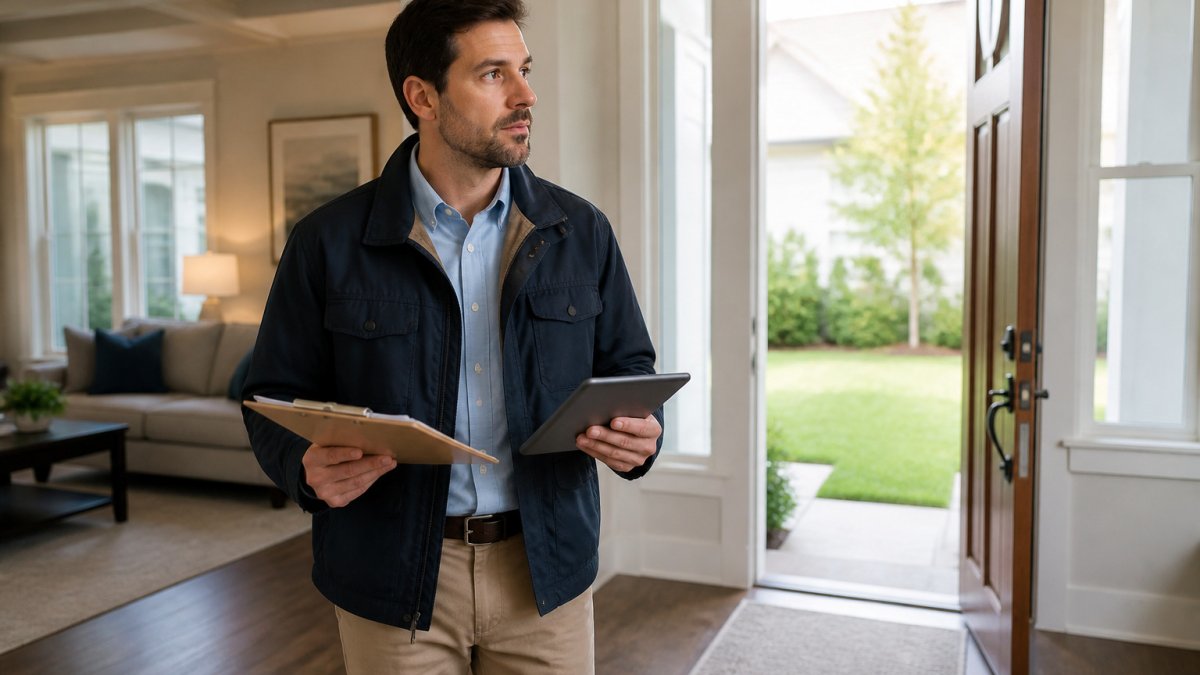
A practical schedule works like this:
| Inspection Type | Frequency | Focus Areas |
|---|---|---|
| Move-in | Before occupancy | Baseline photos, keys, appliance function |
| Routine | Every 6 months | Walls, flooring, HVAC filters, water heater |
| Pre-renewal | 60 days before lease end | Wear, deposit-related damage, repair needs |
| Move-out | Within 24 hours of vacancy | Damage versus normal wear, rekey and cleaning needs |
During each visit, photograph every room from the same angles, check smoke and carbon monoxide detectors, look under sinks for moisture, and test exterior drainage.
Watch out: Inspections that happen only at move-out leave you with no evidence of the property's condition during the tenancy, which weakens any deposit claim you later need to make.
Handling Tenant Screening, Rent Collection and Emergency Repairs Remotely
These three workflows decide whether remote ownership is calm or chaotic, because each one fails loudly when it is handled ad hoc. Build a written procedure for each, keep it in the same document vault as your lease, and review it once a year.
Screening: a consistent, documented process
Screening is the most consequential decision a remote owner makes, because a poor tenant is hard to correct from a distance. The goal is a process that applies identical criteria to every applicant and produces a written record of why each decision was made.
A defensible sequence looks like this:
Schedule Your Free Consultation →
- Publish written rental criteria (income multiple, credit threshold, rental history, occupancy limits, pet policy) before you advertise, and apply them uniformly. Federal fair housing law prohibits discrimination based on protected classes, and many states and cities add protected categories, confirm your local list before you publish criteria (Housing Discrimination Under the Fair Housing Act).
- Collect a completed application with authorization to run a consumer report. Under the FCRA, you need written authorization before pulling a report, and if you decline an applicant based on it you must send an adverse-action notice with the screening company's contact information (the FTC).
- Verify income (pay stubs, employer letter, or bank statements), verify prior-landlord references by phone and document the call, and review the screening report against your published criteria.
- Record the decision and the reason in the applicant file, and retain it for the period your state requires.
Many owners use a standardized application and a third-party screening provider rather than improvising. Professional firms often apply this process at scale. Performance Property Management details its screening approach on the How We Screen Your Rental Applicants page.
Rent collection: automate the ledger, not the relationship
Rent collection works best when it is automatic and the rules are in the lease. Maintaining this level of financial oversight becomes even more critical when you are managing assets from a distance or coordinating an out of state relocation.
When a payment is missed, follow a fixed escalation: send the state-required written notice at the first missed payment (notice periods and wording vary by state), document the date and method of delivery, and only then consider further action.
Emergency repairs: pre-authorize, then verify
Emergency repairs need pre-authorized spending limits and an after-hours contact, decided before anything breaks.
Build a backup vendor list for each trade (plumbing, electrical, HVAC, locksmith, roofing, water mitigation) with two names per trade, and store their after-hours numbers in the same document as the property address and access instructions. If you hire a manager, confirm in the contract who holds the emergency authorization, what the cap is, and how quickly you will be notified.
Maintenance and property inspections are where that coverage matters most. Whether you self-manage or hire help, the operating rule is the same: every request in writing, every approval documented, every invoice filed against the unit.
Hiring a Property Manager for an Out-of-State Rental: Costs, Contracts and Due Diligence
Hiring a manager transfers the daily work but not the responsibility for oversight. Before you sign, verify the manager's licensing, insurance, vendor network and reporting process.
Read the management agreement closely. You can review the fee structure before deciding on a manager.
Due diligence also means asking how the manager would handle a tenant who stops paying, a manager who underperforms, or a fraud attempt.
Booking Your Free Consultation to Set Up Remote Oversight
A remote rental works best when the systems, screening standards and reporting expectations are set before a problem arrives. Whether you self-manage or hire help, start by writing down your processes, choosing your software and fixing your inspection schedule.
If you want to discuss your situation, you can contact us.
Frequently Asked Questions
Can you manage a rental property from out of state?
Yes, many owners manage rentals from another state, but it works best with a clear system. You need reliable tenant screening, a dependable local maintenance network, online rent collection, and a regular reporting routine. Owners who cannot respond quickly to emergencies or who lack local contacts often find remote management stressful and turn to a professional manager. Start with a written process covering who handles repairs, how tenants reach you, and how you will verify the property's condition between visits.
How do you manage tenants when you live far away?
Set up clear communication channels from the start. Use a tenant portal or messaging app for maintenance requests, put response expectations in the lease, and handle rent through electronic payments so collection does not depend on a visit. Document every interaction in writing. Keep a local contact, such as a trusted vendor or property manager, available for in-person issues. Consistent, written communication prevents most disputes that arise from distance.
How do you handle repairs and emergencies at a rental property from out of state?
Build a vendor list before you need it. Identify licensed plumbers, electricians, HVAC technicians and general handymen in the property's area, and confirm which ones offer after-hours service. Set a dollar threshold that lets your local contact approve repairs without waiting for you. Keep emergency instructions, shutoff locations and key access in a shared document. Review insurance coverage so you know what a burst pipe or fire claim requires you to do.
Should you hire a property manager for an out-of-state rental?
Hiring a manager is often worth considering if you cannot inspect the property regularly, lack local vendors, or want someone accountable for tenant relations and eviction handling. Compare the management fee, leasing fee and any maintenance markups, then request the contract and read the termination terms. Ask for references from owners who live out of state and for sample owner reports. Performance Property Management offers a free consultation.
What technology do landlords use to manage rental properties remotely?
Most remote owners rely on property-management software for rent collection, lease storage, maintenance tickets and owner reporting. Online rent payment tools reduce late payments and give you a digital record. Cloud document storage keeps leases and inspection photos accessible from anywhere. A shared calendar and messaging app help coordinate vendors and your local contact. Choose tools that export clean financial reports, since accurate records matter for taxes and for tracking cash flow and net operating income.
How often should an out-of-state landlord inspect a rental property?
A common approach is a full inspection at move-in, a walkthrough at move-out, and periodic inspections in between, often every six to twelve months, depending on the lease and local rules. Check lease terms and state notice requirements before entering, since most jurisdictions require advance written notice. Have a local representative or manager perform inspections when you are not nearby, and document each visit with dated photos and a written checklist covering appliances, roof, plumbing, HVAC and safety devices.
What should be included in an out-of-state rental property management plan?
A solid plan covers tenant screening criteria, lease terms, rent collection steps, a maintenance approval threshold, a vendor list, an inspection schedule, emergency procedures, and a reporting cadence. Include the name and contact details of your local representative, the insurance policy numbers, and where original documents are stored. Review the plan annually and after any major change, such as a vacancy, a new tenant or a change in local landlord-tenant law.